
Siêu tĩnh của các thanh song song (có khe hở ban đầu)
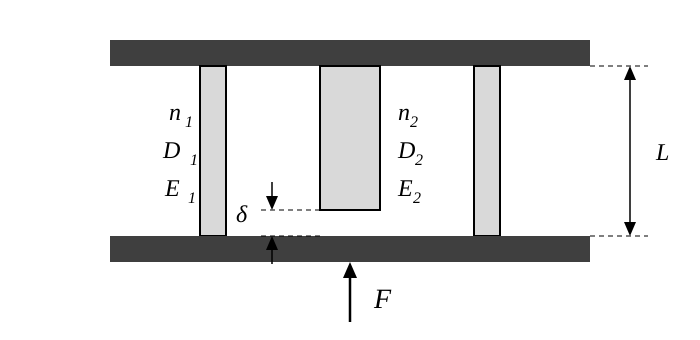
Bài toán siêu tĩnh với các thanh tròn dài ngắn khác nhau được kẹp song song giữa một tường cứng và một tấm cứng. Phía cấu kiện ngắn hơn có khe hở, nên khi tải trọng còn nhỏ thì chỉ cấu kiện dài hơn chịu lực. Trang này tính chuyển vị của tấm cứng, phản lực và ứng suất trong từng cấu kiện, cùng diện tích mặt cắt.
Đầu vào
Kết quả
Ghi chú
- Phản lực và ứng suất là giá trị tính cho từng thanh. Tổng của cấu kiện 1 là , tổng của cấu kiện 2 là , và tổng của hai giá trị này bằng ngoại lực .
- Tường và tấm được coi là không biến dạng (vật rắn tuyệt đối), còn tấm được giả thiết dịch chuyển song song mà không nghiêng. Phép tính này không áp dụng cho trường hợp tấm bị võng, hay tấm bị nghiêng do các cấu kiện được bố trí lệch.
- Cấu kiện được coi là thanh tròn đặc, diện tích mặt cắt lấy theo . Mất ổn định uốn dọc không được xét đến. Với cấu kiện mảnh chịu nén, hãy kiểm tra riêng.
- Với , chiều dài của cấu kiện 2 bằng 0 hoặc âm nên không tính được. Hãy nhập khe hở nhỏ hơn chiều dài cấu kiện 1.
- Ngoại lực chỉ được giả thiết theo chiều nén vào. Nếu nhập theo chiều kéo ra, tức giá trị âm, tấm cứng sẽ tách khỏi cấu kiện và phép tính này không còn đúng.
Trang liên quan
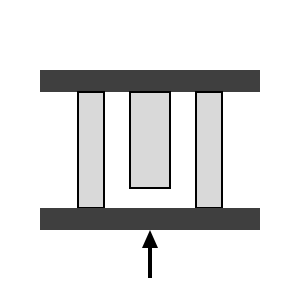
Trình bày các bước lập hệ phương trình gồm phương trình cân bằng lực và điều kiện tương thích biến dạng, cách xử lý khoảng mà cấu kiện ngắn hơn chưa tiếp xúc, cùng quy ước dấu.
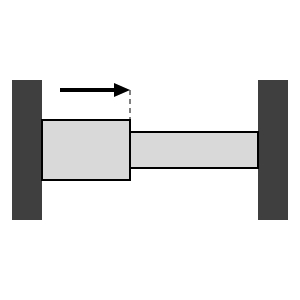
Đây là bài toán siêu tĩnh: thanh ngàm hai đầu vào tường, chịu tải trọng dọc trục tại một điểm nằm giữa thanh. Ở đây các cấu kiện nối tiếp nhau, nên điều kiện tương thích biến dạng là tổng độ giãn dài của hai đoạn bằng 0.

Tính ứng suất sinh ra khi cấu kiện bị ngàm chịu thay đổi nhiệt độ. Cách tìm ứng suất từ lượng giãn nở bị ngàm triệt tiêu chính là cách giải bằng điều kiện tương thích biến dạng.