
Cách tính ứng suất tiếp xúc Hertz
Bi ổ trục trên rãnh lăn, bánh xe trên ray, cam trên con đội — phần này tính ứng suất tại chỗ hai mặt cong tiếp xúc nhau. Nếu coi chúng là vật rắn tuyệt đối thì chỗ tiếp xúc chỉ là một điểm hay một đường, diện tích bằng 0 nên không tính được ứng suất. Thực tế cả hai đều lún xuống một chút và chạm nhau trên một diện tích hữu hạn; diện tích và áp suất đó, suy ra từ lý thuyết đàn hồi, chính là ứng suất tiếp xúc Hertz.
Điều kiện áp dụng
Chỉ dùng được trong phạm vi thỏa mãn cả ba điều kiện sau. Ra ngoài phạm vi đó, giá trị tính ở đây thậm chí không dùng làm ước lượng thô được.
- Diện tích tiếp xúc phải đủ nhỏ so với kích thước của bản thân hai vật thể — phần vật liệu quanh chỗ tiếp xúc phải xem được như bán không gian vô hạn
- Biến dạng phải nằm trong giới hạn đàn hồi. Khi vật liệu chảy dẻo thì công thức không còn đúng
- Mặt tiếp xúc phải không trượt và không ma sát. Lực theo phương tiếp tuyến không được xét đến
Ảnh hưởng của màng bôi trơn, mỏi do tải trọng lặp và độ nhám bề mặt cũng không nằm trong tính toán này. Với những bài toán mà các yếu tố đó chi phối — chẳng hạn tuổi thọ của ổ trục lăn — đừng kết luận chỉ dựa vào các công thức này.
Gộp hai vật thành một
Trước khi vào công thức, hình dạng và vật liệu của hai vật thể được gộp lại, mỗi thứ thành một giá trị duy nhất. Khi hai giá trị đó đã xác định, phần còn lại chỉ phụ thuộc vào việc tiếp xúc là mặt cầu hay mặt trụ.
Bán kính cong tương đương
Giá trị gộp hình dạng lại thành một, xác định bằng tổng của các nghịch đảo.
Mô đun đàn hồi tương đương
Giá trị gộp vật liệu lại thành một. Hệ số Poisson tham gia ở đây.
có cùng đơn vị với mô đun đàn hồi Young, nhưng không phải mô đun đàn hồi Young của một trong hai vật liệu. Đại lượng này gộp mức độ dễ biến dạng của hai vật thể lại làm một, và chỉ thuộc về chỗ tiếp xúc này.
Xử lý mặt phẳng và mặt lõm
Hình dạng thay đổi thì công thức vẫn giữ nguyên. Chỉ có cách tính là thay đổi.
Khi mặt đối tiếp là mặt phẳng
Mặt phẳng là mặt cong có bán kính cong vô hạn. Vì nên bán kính cong tương đương chính là bán kính của mặt lồi.
Khi mặt đối tiếp là mặt lõm
Trường hợp một mặt lồi nằm lọt trong mặt lõm, như viên bi nằm trong vòng ngoài của ổ bi. Bán kính cong của mặt lõm được lấy là giá trị âm.
là điều kiện bắt buộc. Nếu mặt lồi lớn hơn thì nó không lọt được vào mặt lõm, trở thành âm và công thức mất ý nghĩa. Trang tính báo lỗi với những giá trị nhập không thỏa điều kiện này.
Mặt lõm cho lớn hơn so với mặt phẳng hay mặt lồi, nên cùng một tải trọng sẽ trải trên diện tích tiếp xúc rộng hơn và áp suất giảm xuống. Đó là lý do đường lăn của ổ trục được làm thành rãnh.
Tiếp xúc mặt cầu (tiếp xúc điểm)
Diện tích tiếp xúc là một hình tròn. Bán kính của nó ký hiệu là .
Lượng mà tâm của hai vật thể tiến lại gần nhau (khoảng tiến lại gần).
Áp suất trên mặt tiếp xúc không đều mà phân bố theo dạng nửa elip, lớn nhất ở tâm và bằng 0 ở mép. Ký hiệu khoảng cách tính từ tâm là , ta có công thức sau.
gấp 1.5 lần áp suất trung bình (giá trị trung bình là ). Vì vậy, kiểm tra bằng cách lấy tải trọng chia cho diện tích sẽ cho kết quả thấp hơn thực tế.
Tiếp xúc mặt trụ (tiếp xúc đường)
Tiếp xúc giữa hai hình trụ đặt song song trục với nhau. Diện tích tiếp xúc không phải hình tròn mà có dạng dải; nửa chiều rộng của nó ký hiệu là , chiều dài theo phương trục ký hiệu là .
Áp suất phân bố theo dạng nửa elip theo phương cắt ngang dải tiếp xúc.
Ở đây gấp 4/π ≒ 1.27 lần áp suất trung bình.
Khoảng tiến lại gần không được tính ra. Lý do là trong tiếp xúc đường, lượng tiến lại gần còn phụ thuộc vào hình dạng bên ngoài vùng tiếp xúc, nên chỉ riêng công thức Hertz không xác định được nó. Trang tính cũng không xuất ra giá trị này.
Áp suất tiếp xúc khác với ứng suất bên trong vật liệu
là giá trị lớn nhất của áp suất tác dụng lên hai mặt đang tiếp xúc, chứ không phải ứng suất lớn nhất bên trong vật liệu. Cần xem đại lượng nào là tùy vào điều bạn muốn kiểm tra.
- Với Để đánh giá vết lõm và mài mòn, hãy xem — chính là áp suất mà bề mặt phải chịu
- Với Để đánh giá nứt và tróc rỗ, hãy xem ứng suất bên trong. Mỏi do tiếp xúc lăn không bắt đầu ở bề mặt mà bắt đầu từ hơi sâu bên dưới bề mặt
Với tiếp xúc mặt cầu, ứng suất bên trong viết được dưới dạng tỉ lệ với .
- Ứng suất kéo lớn nhất — xuất hiện ở Vành của vòng tròn tiếp xúc, ngay trên bề mặt, hướng ra ngoài
- Ứng suất cắt lớn nhất — xuất hiện Ngay bên dưới tâm vùng tiếp xúc, ở độ sâu khoảng . Khi thì bằng
Các con số này thay đổi theo . 0.31 và 0.48 là các con số ứng với , tức giá trị gần đúng của thép; hệ số Poisson khác sẽ cho những con số khác. Trang tính không xuất ra những giá trị này. Nó chỉ tính đến .
Ghi chú
- là Lực pháp tuyến tác dụng tại chỗ tiếp xúc. Hãy quy trọng lượng bản thân và tải trọng từ bên ngoài về thành phần vuông góc với mặt tiếp xúc rồi mới nhập vào
- Với mặt trụ, là Chiều dài tiếp xúc thực tế. Ở gần hai đầu, áp suất tăng lên (edge load) nên điều kiện tại đó khắc nghiệt hơn những gì công thức này cho thấy
- Trang tính còn xuất ra cả và : khi đối chiếu với kết quả tính tay, hãy khớp hai giá trị này trước.
Trang liên quan
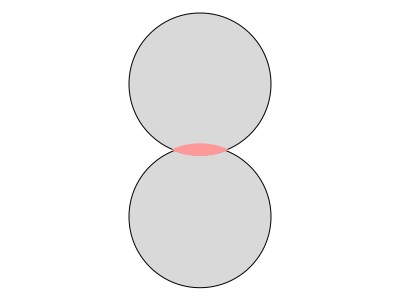
Sáu trang tính: tiếp xúc mặt cầu và mặt trụ, mỗi loại ứng với mặt lồi, mặt phẳng hoặc mặt lõm.
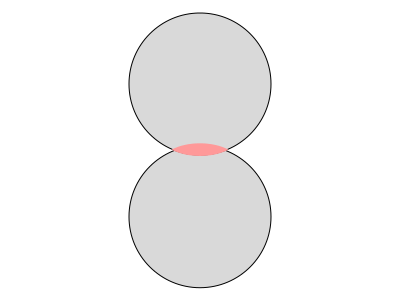
Tìm bán kính cong tương đương, mô đun đàn hồi tương đương, đường kính vùng tiếp xúc, khoảng tiến lại gần và áp suất tiếp xúc lớn nhất.
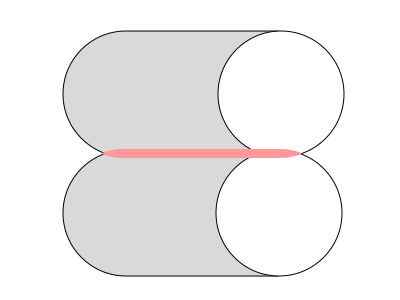
Nhập chiều dài tiếp xúc để tìm chiều rộng vùng tiếp xúc và áp suất tiếp xúc lớn nhất.